A calm, scalable system for managing city-wide transport operations
Designing a Franchise Operator Platform for Greater Manchester
Role: Lead Product Designer
Transport for Greater Manchester
UX/UI, SaaS,
System Design
Transportation
1 Year 9 Months
Challenge
The intent was to create a platform that felt familiar, calm, and trustworthy, despite the complexity of the domain.
The challenge was twofold:
There was no established product vision or UX foundation, only technical requirements.
Teams were delivering at pace without a shared understanding of user workflows or long-term system behaviour.
The risk was building a technically complete product that would be difficult to operate at scale.
Results
Adoption: 30 franchise bus operators and 300+ users onboarded successfully
Operational efficiency: Administrative tasks such as onboarding and permit management were reduced by an estimated 30-40% in completion time.
Quality: The MVP passed QA on first release and was adopted without major usability issues.
Trust: Early delivery and product clarity secured confidence at Executive Director and Managing Director level.
Longevity: Despite programme budget constraints, a dedicated team was retained to maintain and support the platform.
35%
Improved onboarding process
89%
User satisfaction score
84%
Increase in time spent on website
Process
The Solution
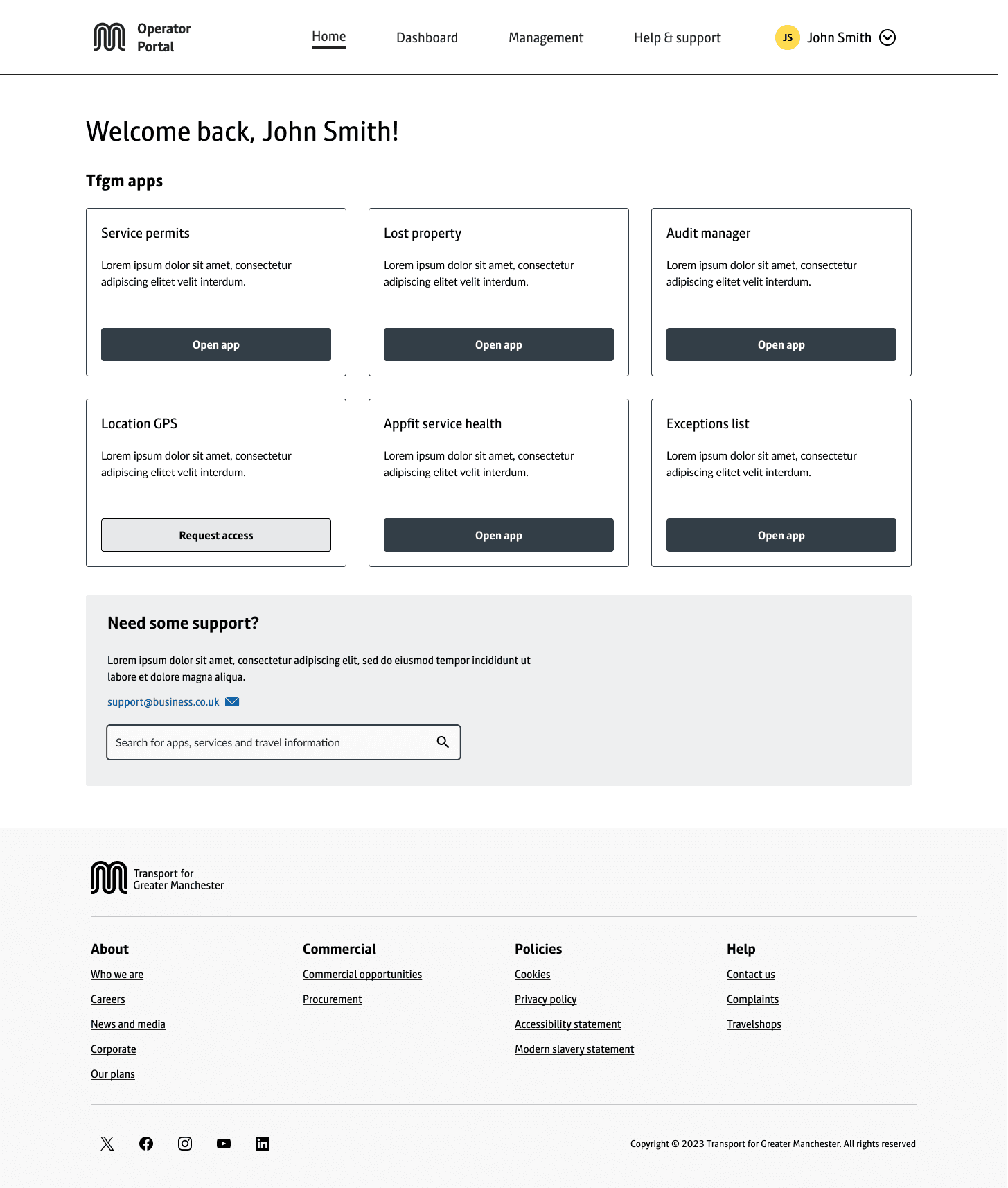
I approached the work by focusing on structure before surface.
Understanding the system
I began by mapping the full operational landscape; who needed to do what, when, and under which constraints. Rather than starting with screens, I focused on data flows, permissions, and responsibility boundaries between TfGM and operators.
Defining clear user journeys
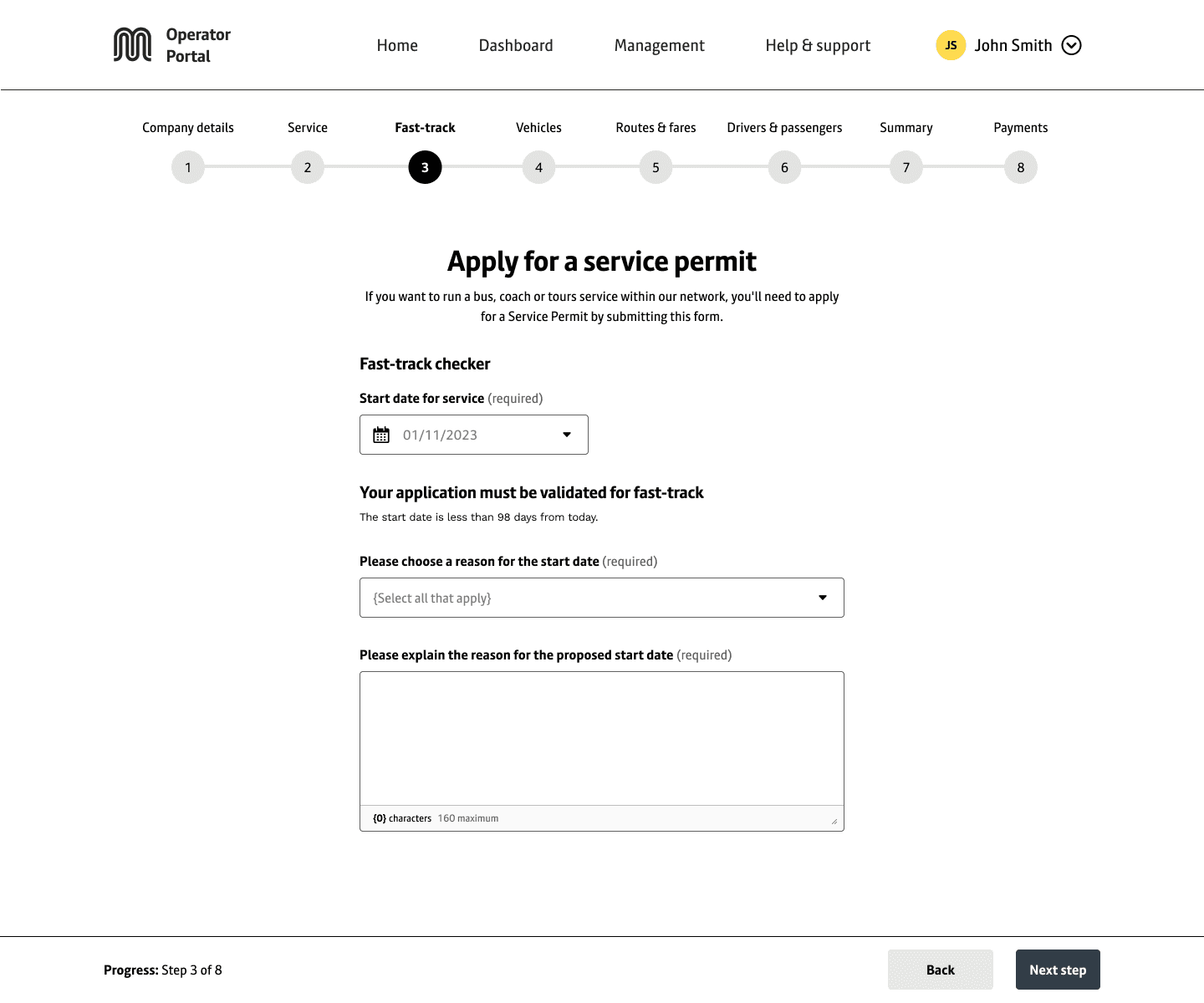
From this foundation, I defined a small set of core journeys; onboarding an operator, managing permits, responding to incidents, tracking compliance. These journeys became the backbone of the product and informed all subsequent design decisions.
Designing for clarity and control
Given the administrative nature of the platform, I prioritised:
Clear hierarchy and information density.
Explicit system states and feedback.
Error prevention over error recovery.
Wireframes were used early to validate flow and intent. Visual design was introduced only once behaviour and structure were resolved.
Building a reusable system
I contributed to a shared design library tailored for B2B and operational use cases for tables, filters, status indicators, permissions, and empty states to ensure consistency and reduce cognitive load across the platform.
Close collaboration with engineering
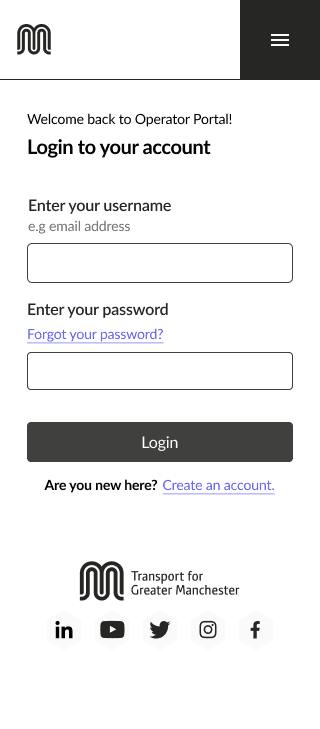
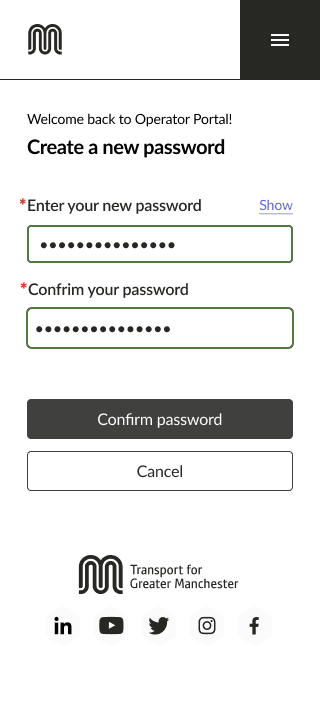
Design was developed alongside engineering. I ran regular walkthroughs, aligned on edge cases, and stayed close to implementation, occasionally supplying HTML and CSS to ensure fidelity and reduce ambiguity.



Conclusion
What worked well
Starting from system behaviour rather than screens created a product that scaled calmly.
Designing alongside engineering improved quality and reduced rework.
A strong foundational structure allowed the product to evolve beyond the initial MVP.
What I would improve
Earlier access to end users would have enabled deeper usability validation before launch.
Establishing baseline metrics earlier would have strengthened long-term measurement.
This project reinforced the importance of UX leadership beyond screens to align stakeholders, shape vision, and bridge design and engineering to deliver real-world impact at scale.