Designing a Force-Based Interaction Platform That Secured €23m in Funding
Role: Staff Product Designer
Turning advanced sensing technology into a clear, expressive user experience as a founding Product Designer
Peratech Holdco
11-50
UX/UI, Zero-to-One,
Product Design
Tech Software
1 Year 6 Months
Challenge
Peratech’s core technology, force pressure sensing, adds a new dimension of input beyond clicks and gestures. The intent was to transform this capability into an intuitive, expressive platform that could scale across devices, users, and future products.
The challenge was foundational:
There was no existing product, UI system, or brand.
The technology was powerful but difficult to explain to non-technical users.
The software needed to operate within the constraints of WinUI (XAML).
The ambition extended beyond a single app toward an interconnected ecosystem of hardware and services.
No feedback or learning loop existed between users and the business.
The risk was building an impressive technology without a coherent or adoptable experience.
The Product
The emerging software platform enables users to:
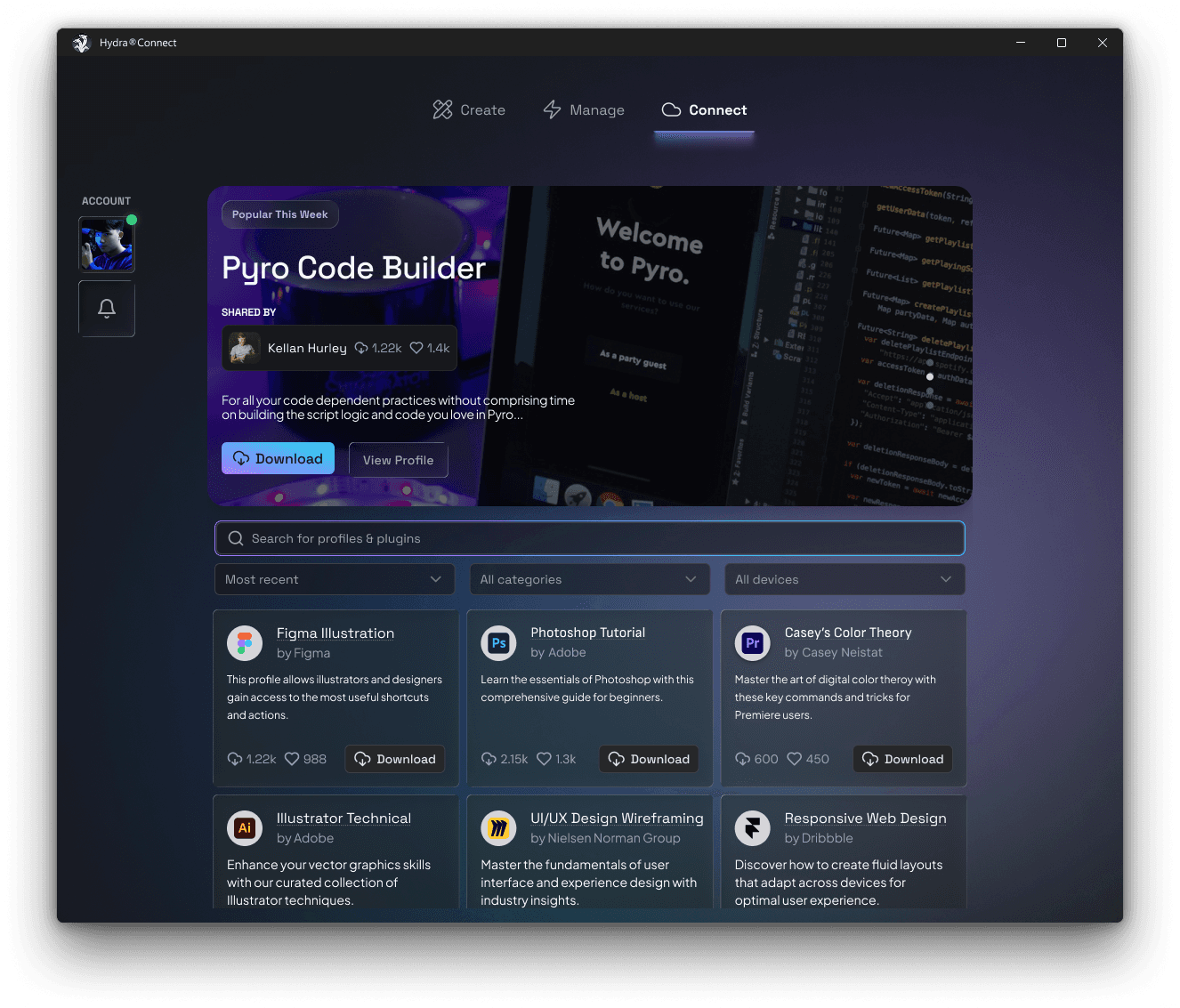
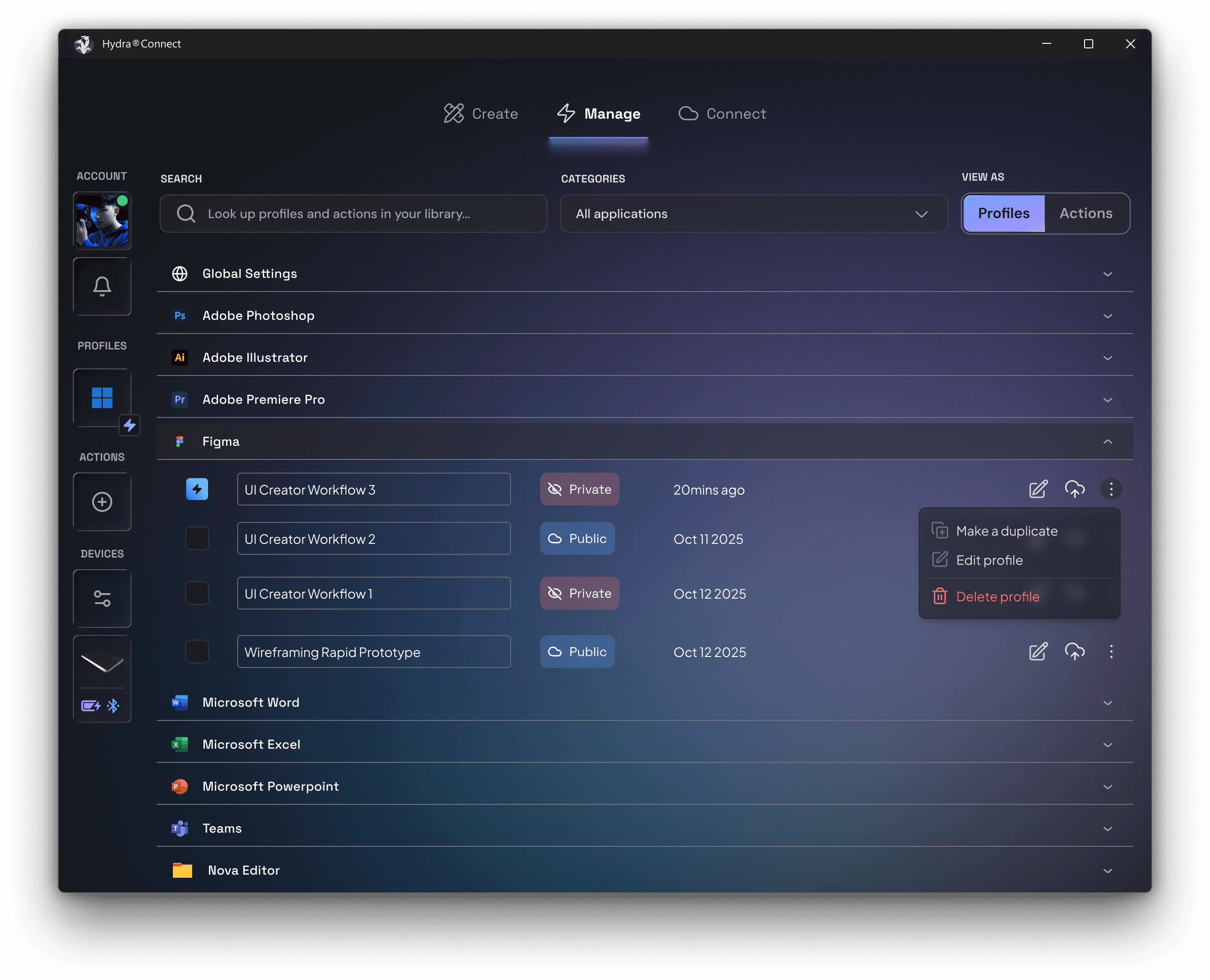
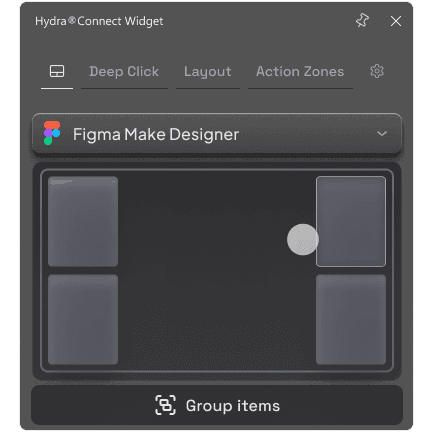
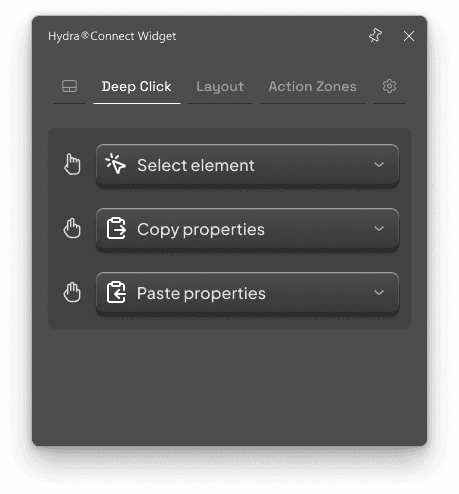
Customise force-based interactions across keyboards, mice, trackpads, and future devices.
Create expressive workflows for creative and productivity tasks.
Manage hardware behaviour through a consistent software layer.
The system is designed to scale as a foundation for future hardware and software offerings.
Results (So Far)
Business confidence: Design clarity and product vision contributed to securing €23m in funding.
Platform validation: Partnership established with a major technology firm to develop the platform for future hardware launches.
Execution readiness: A shared UX, UI system, and brand foundation enabled teams to move forward with alignment and speed.
Roadmap momentum: Platform positioned as the software backbone for an upcoming public launch (2026).
€23m
Funding raised
89%
User satisfaction score
18%
Overall improvement using A/B
Process
I approached the work by prioritising interaction clarity and system coherence over surface design.
Starting from first principles
Rather than designing screens, I focused on what force input should mean to users, how pressure could map naturally to intent, control, and expression. This informed interaction models across devices and software.
Creating shared understanding
I led workshops with C-suite, directors, and delivery teams to establish a common product vision and roadmap. An early Minimum Viable Experience (MVE) was developed to make the product’s value tangible to all stakeholders.
Reducing complexity through structure
Working closely with engineers, I helped define shared terminology and simplified technical concepts. Data flows and configuration logic were iteratively reduced to expose only what users needed, when they needed it.
Designing a scalable platform
I designed:
A core application for configuring and managing devices.
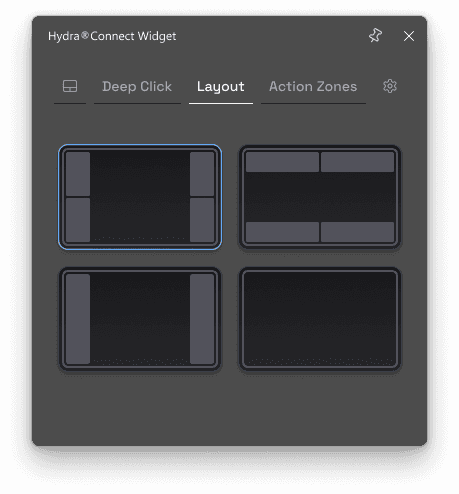
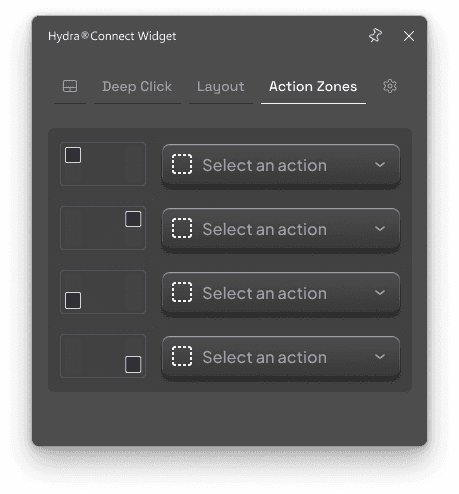
A lightweight desktop widget for fast interaction.
A marketplace model for sharing and extending behaviours.
All components were designed to work as one system rather than isolated tools.
Grounding decisions in feedback
I set up local usability and A/B testing sessions in Stockholm, using CSAT scoring and qualitative insight to benchmark clarity, learnability, and perceived value.
Establishing visual and brand foundations
Alongside product design, I led the creation of a new brand identity, defining tone of voice, visual language, interaction patterns, and guidelines to support future launches.



Conclusion
What worked well
Treating interaction as a first-class design problem unlocked the value of the technology.
Early MVE work aligned stakeholders quickly and reduced speculative debate
Close collaboration with engineering ensured feasibility without compromising clarity.
What could be improved
Earlier external validation at broader scale would strengthen long-term prioritisation.
Additional accessibility exploration around force-based input will be critical as the platform matures.
This work reinforced the importance of restraint and intent when designing new interaction paradigms; complex technology only succeeds when it feels natural, predictable, and quietly powerful.